
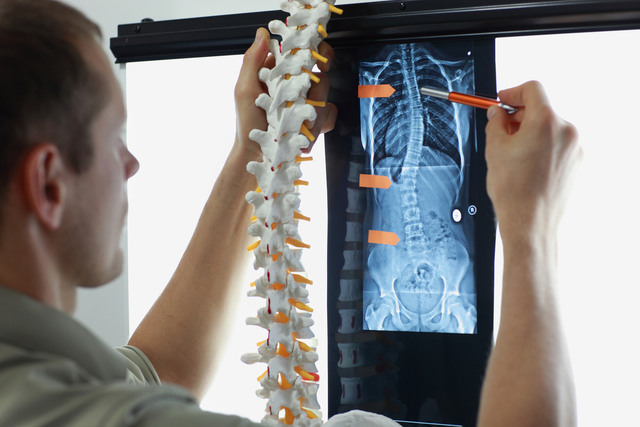
While scoliosis is not considered a rare condition, it still affects an estimated 2-3% of the general population. That translates to roughly 6-7 million people in the U.S. The condition produces a wide variety of symptoms, including chest pain.
Scoliosis is a spinal condition. We would expect most of the symptoms related to it to manifest themselves in whatever area of the back is most affected. But scoliosis can affect the thoracic region of the spine, causing a misalignment of the rib cage. One of the results of such misalignment would be pain felt in the chest.
Treating scoliosis pain is a difficult proposition. It is even more difficult one it affects the ribcage and chest. But there is an alternative treatment some pain medicine doctors are turning to when nothing else helps. It is known as RACZ Caudal Neurolysis – or more simply, the RACZ Procedure.
Normally for Back and Leg Pain
The RACZ Procedure is known scientifically as percutaneous epidural adhesiolysis. The experts at Weatherford, Texas-based Lone Star Pain Medicine describe it as a minimally invasive procedure normally used to treat chronic back and leg pain. But it can be useful to treat non-cardiac chest pain (NCCP) in some cases, including pain related to scoliosis.
Lone Star says the procedure takes its name from the doctor who developed it, Dr. Gabor Racz. The procedure relies on a combination of medications and a specialized catheter with a spring-loaded tip. The catheter is normally inserted into the epidural space surrounding the spinal cord. For most procedures, this means accessing the caudal area, otherwise known as the lower back.
For chest pain associated with scoliosis, the exact same procedure can be used with one difference in play: instead of inserting the catheter via the caudal space, it is inserted through the thoracic region of the spine. This different location does not change the purpose behind the RACZ Procedure.
What It Accomplishes
The type of back pain normally associated with the procedure is the result of two things: scar tissue and inflammation. Dr. Racz Decided to treat the pain by getting to the root cause rather than just administering pain medication. So he developed a technique that accomplishes two things:
- Eliminating Scar Tissue – Scar tissue, known medically as ‘adhesions’, can cause pain by compressing or otherwise irritating spinal nerves. The RACZ Procedure relies on a combination of medications and the mechanical action of the spring to break down and eliminate that tissue.
- Inflammation Reduction – Among the medications delivered by the catheter are anesthetics, steroids, and a hypertonic saline. Anesthesia offers temporary pain relief while steroids go to work to reduce long term inflammation. The saline solution flushes out inflammatory markers.
In relation to NCCP, RACZ Caudal Neurolysis can act as breakthrough treatment for a condition that is otherwise difficult to deal with. Consider the fact that NCCP it is very hard to nail down because it can be caused by so many things. When it is the result of scoliosis, a doctor is essentially treating multiple conditions simultaneously.
If the RACZ Procedure can help relieve a scoliosis patient’s chest pain, some level mobility can be restored. In turn, that can open the door to other treatments that strengthen chest wall muscles, helping them provide better support. Further pain reduction would be expected.
It should be noted that turning to RACZ Caudal Neurolysis to treat NCCP isn’t limited only to scoliosis-related pain. It’s also a valuable option for patients experiencing post-surgical scarring and disc herniation. The treatment isn’t appropriate for every type of NCCP, but it does work well for some very specific issues.
Want to know more? Head over to our blog!